Showing posts with label complete streets. Show all posts

Friday, August 12, 2011

Freedom Takes to the Streets

 by Betsy Harvey, MCRP '12
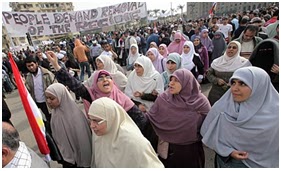
Out of curiosity, yesterday I searched online for the word “streets” in Google’s news search engine. I was surprised that most of the first few pages were dominated by some sort of protest taking place, from the riots in England to protests in Chile and Syria. But I suppose it makes sense. Streets, it seems, have always been the place to stage protests. It’s the one public space that is nearly impossible to control, and you’re guaranteed that you will be seen. It’s important that streets remain open for protests as protests are vital to a healthy democracy. Yes, there will be some that are inevitably senseless and violent like those in England right now, but others will be powerful, decisive moments in a country’s history, such as the Egyptian uprising this past spring. Streets are not only for transportation: they are a country’s meeting place, an arena for the people’s voice to be heard.
The question, of course, is whether or not there is a point at which protests should be restricted or abolished altogether. Should a permit be required, which might prevent all but largest protests from taking place? Are there opinions that one should not be allowed to promote in public? These are broader free speech questions that must always be questioned in a democracy. The street can be an outlet for such a debate, a potent place for all peoples to exercise their right to free speech.
A crowd gathering in London, before clashing with the police. Courtesy of www.dailymail.co.uk

Protesters in Tahrir Square during the Egyptian uprising in 2011. Courtesy of www.guardian.co.uk

Saturday, July 30, 2011

On Being Social

by Betsy Harvey, MCRP '12

As I read about the new idea of social space – new in the sense that it only recently has been named – I found myself considering what “space” actually is. The most pertinent Merriam-Webster Dictionary online definition is, “a limited extent in one, two or three dimensions.” Quite straight forward. Obviously we’re talking about three dimensions, but the key here is “limited.” Space has bounds. Eric Britton, the editor of the website World Streets points out that we typically only refer to space as either public or private, and they clearly have boundaries. Private property does not overlap with public property, and vice versa. But by only seeing space as private or public, we only understand it in terms of property rights, and that limits its capacity. Because there is a limited amount of space, it must be used expansively.
By expansive I mean making it available to the broadest number of people reasonably possible. Separating uses, as is so often done – including private and public – encourages car use and discourages people from using the space fully, by, for example, walking, window shopping, reading, talking, eating and biking. Instead of isolating all of these uses, it is much more efficient to create space, such as on streets or sidewalks, that enables them to occur. But it isn’t just for efficiency. People are social. We enjoy, for the most part, being outside, near others.
This has great transformative power for street design. If we think of streets – including all the rights-of-ways – as social space, we can make so much more vibrant and inclusive. The typical public space of the road that only shuttles cars back and forth suddenly becomes a social space with benches for resting and talking, maybe a small park, and a continuous area for spontaneous interactions and observations that keep us attuned to and interested in the world around us.

Friday, July 22, 2011

Complete Streets Revisioned

by Betsy Harvey, MCRP '12

Complete streets. Like many planning terms – “smart growth,” “sense of place,” “livable community,” to name a few – it is a vague term, conjuring up different images for each of us. What does it mean to have a complete street? Taking the bus out of Manhattan toward Amherst, Massachusetts – the epitome of a small New England town – it occurs to me that a complete street in New York must be different from a complete street in a town like Amherst. A bike taxi squeaks by our bus, just missing the parked car on the curb. You would never see one in Amherst, but in New York, if you want a truly complete street you had better plan for them. And for horse-drawn carriages.
Not only are the transportation needs different, but the dissimilar cultures affect what can be built on streets. New Yorkers are impatient drivers; Amherst drivers are not. What street changes will New Yorkers tolerate? As evidenced from the fierce reaction by some against the Bloomberg administration’s implementation of new bike and pedestrian facilities (which are really not drastic even if they are a huge step forward for New York), not much. In Amherst, however, you can get away with a lot more. A vocal bike culture already exists, and so it’s not as hard to build in Amherst, for example, the bike lanes that have been built with a fight in New York.

Source: nytimes.com
If the Federal Complete Streets Act passes, this will be one of the biggest hurdles it will face. How do you implement a policy this vague, that will mean many different things to different people? Can it be consistently implemented, so that when you bike or walk or take transit in different cities you can expect similar facilities? These are some problems, but the act offers great promise: that, when it comes to federally-funded streets, at least, all Americans will be treated equally.

Saturday, July 16, 2011

Transportation Fridays: Three Ideas to Change Transportation Planning

by Betsy Harvey, MCRP '12

What emerging ideas and trends of today will change the course of transportation planning for tomorrow? This week I want to touch on three new policies and ideas that I think will do so, and in the next three weeks, I will dedicate a post to each. While they are still in their infancy, I think they have big implications for the future of transportation, and cities in general. No longer, it seems, are activists the only ones pushing for safer, more inclusive roads; policy-makers are also moving toward viewing streets as public spaces for all users. This doesn’t cover all of them, of course, so what else do you think will change planning?
1.       On May 5 and May 24, the House and the Senate, respectively, introduced the Safe and Complete Streets Act of 2011. If passed, the act would require all federally funded transportation projects include proper facilities for all road users, including bicyclists, pedestrians, children, the elderly and transit users. They are currently being reviewed by subcommittees. The law would not only make streets more accessible safer as well; in the last ten years, 67% of pedestrian deaths occurred on federal roads.
2.       On March 5, the Christian Science Monitor reported that New Haven, Connecticut is tearing out the highway that has sliced through the heart of the city for decades. Other cities are taking out their highways as well, including Providence, Road Island and Baltimore, the latter of which is being replaced by parking and a light-rail station. Razing highways will not alone revitalize a depressed neighborhood, so it will be interesting to see the consequences for the affected neighborhoods.
3.       We’re familiar with private and public space . . . but what about social space? It’s a new way to look at streets: as social space, the theme of the recent 5th Annual Congress of Cities for Mobility that took place on July 3-5 in Stuttgart, Germany. How can imagining streets as social space change the way we build and use them?

What do you think are the policies and ideas that will shape planning in the future?