Friday, February 8, 2013

Service Opportunities at Bloustein


An update from the new RAPPS service chair:
Maggie Dobbs, MCRP '14

Bloustein is teaming up with the Endeleo Project for this year's Rutgers Half-Marathon and it would be great if we got as many runners and volunteers as we can! The Endeleo Project is a non-profit organization that helps to link students in the developing world with educational supplies and is operated by David Hersh, a Blou PhD. 

For every runner who registers as part of the Endeleo Project team, $5 will be donated to the non-profit, and for every volunteer we have signed up to help on race day, $25 will be donated!  For those interested in running, David has kindly offered to set you up with a personalized training schedule to get you in shape for the big day. He has also organized group run dates, beginning February 26 from about 5 to 7 pm that will be followed by happy hour at Harvest Moon. 

For more information about the non-profit, visit www.endeleoproject.org

To register for the run, follow this link:
http://unite.cgiracing.com/REGISTRATION.aspx

Saturday, March 10, 2012

News for the week of: March 4th - 11th by Thomas Little


Planning News

"New Jersey Isn’t Capitalizing on Demand for Walkable Places"
http://www.njfuture.org/2012/03/05/new-jersey-walkable-places/

News Clip:"New Jersey is widely perceived as consisting mainly of suburbs serving these two cities, even if many of its small towns do not fit the low-density, single-use stereotype of a “suburb.” The distinction, however, between city and suburb as the defining paradigm for describing the built environment is giving way to a new dichotomy: walkable urbanism versus drivable sub-urbanism. New Jersey is well positioned to take advantage of this change."

"Upper-Class Drivers More Likely to Break Rules of the Road"
http://radar.planetizen.com/node/31157?prev=http%3A%2F%2Fradar.planetizen.com%2Flist

News Clip:"According to new research from the Institute of Personality and Social Research at the University of California, upper-class individuals are more likely to break the law while driving, compared to lower-class individuals. In both naturalistic and laboratory methods, upper-class individuals were also more likely to exhibit unethical decision-making tendencies, take valued goods from others, lie in a negotiation, cheat to increase their chances of winning a prize, and endorse unethical behavior at work."


News Clip:"Inviting residents to participate in map-making gives them a voice in the spatial planning process. It also provides insights into how they use their cities – where they live, where they work, where they cycle."


News Clip:"The Bicycle as a symbol of progress, of renewal, of promising times ahead. This is not a new concept. Indeed it has been around since the invention of the bicycle. Many bicycle posters at end of the 19th century featured promising themes like liberation, progress, freedom."


News Clip:"The group began with the proper assumption that the U.S. school system is in need of a drastic fix of some sort. But rather than hiring better teachers or rejiggering standardized testing, they opted to challenge the system's very infrastructure. The result is what you see above: A bunch of schools perched throughout the Manhattan skyline like eagle nests, drawing eyes upward with flashy, schoolbus-yellow paint jobs."

Public Policy News

"Santorum and Higher Ed"
http://www.insidehighered.com/news/2012/03/09/santorums-views-and-history-higher-education
News Clip:"Santorum seemingly opposes not only federal support for colleges and universities but some of the underpinnings and goals of the American higher education system. He railed against colleges and universities as “indoctrination mills” lost to Satan. Then he derided President Obama’s push for more Americans to pursue higher education: “What a snob.”"


News Clip:"Although black students made up only 18 percent of those enrolled in the schools sampled, they accounted for 35 percent of those suspended once, 46 percent of those suspended more than once and 39 percent of all expulsions, according to the Civil Rights Data Collection’s 2009-10 statistics from 72,000 schools in 7,000 districts, serving about 85 percent of the nation’s students."


News Clip:"The AARP report, which examined the retail prices of the 514 brand name and generic drugs most widely used by Medicare recipients, said that the price of generic drugs fell by nearly 31 percent from 2005 to 2009. But at the same time that brand-name drug prices grew by nearly 41 percent and specialty drugs rose more than 48 percent. The rate of inflation, by contrast, grew by just over 13 percent over the same period."


News Clip:"Doctors who have easy comput
er access to results of X-rays, CT scans and MRIs are 40 to 70 percent more likely to order those kinds of tests than doctors without electronic access, according to a study to be published in the March issue of the journal Health Affairs."


News Clip:"NEWARK — Work has begun on an education-centered community featuring three charter schools and affordable housing for teachers in the city’s decayed downtown, with much of the design work done by the noted architect Richard Meier."

Monday, March 5, 2012

News for the week of: February 26th - March 3rd by Thomas Little


National News
News Clip:"What is clear is that as governor he had high-profile fights with the leader of his state's university system, that he is a generous donor to his alma mater, that he thinks highly of for-profit higher education and that a significant higher education software company, Jenzabar, is among his campaign's strongest backers."
News Clip:"Santorum again called President Obama a "snob" for wanting all Americans to go to college. There are "good, decent men and women," Santorum said, who are proud of their skills that were "not taught by some liberal college professor." He added, comparing himself to President Obama: "He wants to remake you in his image. I want to create jobs so people can remake their children into their image, not his."
News Clip:"A team of researchers led by Nicole M. Stephens, an assistant professor at Northwestern University's Kellogg School of Management, argues that American academic institutions expect a level of independence that is uncomfortable for many first-generation college students, who researchers say are more likely to come from poorer backgrounds that emphasize collaboration and interdependence."
"Super Tuesday preview: Ohio shaping up to be microcosm of heated GOP primary race"
: http://www.nj.com/news/index.ssf/2012/03/super_tuesday_preview_ohio_sha.html

News Clip: "The upcoming Super Tuesday primary in Ohio is proving to be the perfect microcosm of the nation’s unruly race for the Republican presidential nomination: Mitt Romney is spending lots of money, Rick Santorum is aggressively courting conservatives and Newt Gingrich is counting on big ideas to swing votes his way."
New Jersey News
"The Numbers Game: Can NJ Afford Christie's Tax Cuts?": http://www.njspotlight.com/stories/12/0227/0243/

News Clip: "While Christie and Democratic legislative leaders have been sparring for the past six weeks over whether to cut income taxes or property taxes, the real question is whether New Jersey can afford a major tax cut at all."
"At the Rescue Mission of Trenton, Christie offers plans for treatment program of nonviolent drug offenders"
: http://www.nj.com/mercer/index.ssf/2012/03/at_the_rescue_mission_of_trent.html


News Clip:"Surrounded by the facilities of the Rescue Mission of Trenton and some of the men whose recoveries it has enabled, Gov. Chris Christie yesterday offered details for expanding a program that would make treatment mandatory for nonviolent drug offenders instead of time in jail"
"In New Jersey, a Battle Over a Fluoridation Bill, and the Facts"
Link: http://www.nytimes.com/2012/03/03/nyregion/in-new-jersey-a-battle-over-fluoridation-and-the-facts.html?ref=health


News Clip:"While 72 percent of Americans get their water from public systems that add fluoride, just 14 percent of New Jersey residents do, placing the state next to last, ahead of only Hawaii, and far behind nearby New York (72 percent), Pennsylvania (54 percent) and Connecticut (90 percent)."
"Conflicting Views Over State’s Strategic Growth Plan"
: http://www.njspotlight.com/stories/12/0302/0116/

News Clip: "The 41-page plan emphasizes economic growth instead of environmental preservation by establishing geographic industry clusters where the state will direct investments and resources to bolster high-growth sectors, such as finance, healthcare, and the ports."
"NJ Poised to Vote on Health Insurance Exchange"
: http://www.njspotlight.com/stories/12/0228/0351/

News Clip:"The legislature is to vote March 15 on bills to create New Jersey’s health insurance exchange, an online virtual marketplace that would make a range of more affordable options for health coverage available to individuals and employees of small businesses when federal healthcare reforms go into effect in 2014."
"Local governments stand to save millions by opting in to N.J. health plan"
: http://www.nj.com/news/index.ssf/2012/02/local_governments_stand_to_sav.html


News Clip:"Local governments could save more than $100 million annually by opting for the state health plan instead of costlier alternatives, according to a state Comptroller’s Office report released Tuesday."

Wednesday, February 29, 2012

RAPPS General Meeting 2/29/12 by Joshua Wilcox


This afternoon, the RAPPS Board hosted the first general meeting of the semester. The main points covered in the meeting are listed below along with the contact information of those in charge:

  1. The RAPPS blog: The RAPPS blog is soliciting content and coverage ideas from all planning and policy students. If you are interested in contributing articles or come across information relevant to planning or policy that should be covered by the blog, please email RAPPS editor Joshua Wilcox at jpw137@scarletmail.rutgers.edu.
  2. Service opportunities: RAPPS Service Chair Emily Manz is planning a visit to the Greater Newark Conservancy in late March or early April to do some gardening. An email will be sent out when a date is confirmed. If you are interested in participating or have ideas for more service opportunities, please email Emily at emily.manz@rutgers.edu.
  3. Tour of Lower Manhattan: RAPPS founder and Bloustein alum Richard Landman has offered to guide students on a tour of Lower Manhattan. The charge for the entire group will be $250. If you are interested, email the RAPPS Board at rappsmailbox@gmail.com. You can find more information about Mr. Landman’s tours at http://www.infotrue.com/tour.html.
  4. New cycling GSO: Bloustein PhD candidate Brian Stromberg is in the process of forming a new GSO for graduate students who are interested in cycling. The GSO will serve to coordinate bike rides, movie nights, and speakers related to cycling and transportation issues.  Stromberg is also working towards securing a possible on-campus location for bike repairs and events. Please contact him at brian.stromberg@gmail.com if you are interested in participating.
  5. DC alumni contacts. Students interested in networking with alumni living in Washington D.C. can contact Brian Stromberg at brian.stromberg@gmail.com. He will give you the contact information of alumni in the city.
  6. New Rutgers student organization: Latinos Entering Government and Law (LEGAL) From the group’s website, “The purpose of LEGAL shall be to further promote higher education by unifying all, but not limited to, Latino students throughout Rutgers University on the New Brunswick/ Piscataway Campus who wish to pursue a career in government and/or law.” For more information, please visit the group’s website at  http://groupspaces.com/legal.
  7. Bloustein Symposium: The Bloustein School will host the Symposium on Planning Health, Sustainable Communities from Thursday April 26th to Friday April 27th. The registration fee for students is $25. For more information, visit the Symposium’s website: http://policy.rutgers.edu/symposium2012/. Students are encouraged to submit abstracts for posters. If interested, contact the RAPPS Board at rappsmailbox@gmail.com.
  8. GSA funds: We are not using all of our GSA funds. If they are not used by the end of the semester, we could lose funding in future years. Please email event ideas to the RAPPS board at rappsmailbox@gmail.com.
  9. Coffee talks: The RAPPS board is considering hosting a series of Bloustein coffee talks, informal meetings where students discuss planning and policy issues of interest. If you have ideas for specific policy or planning topics you would like to discuss with your peers, please email the RAPPS board at rappsmailbox@gmail.com.
  10. Super Tuesday: The RAPPS board will host an event next Tuesday March 6th at 7:30 to watch results from Super Tuesday and eat free pizza.
  11. Women’s Leadership Conference: The Women’s Leadership Conference will be held on March 30th. It is open to all graduate students and will include a planning and policy component. Any questions regarding this event can be sent to Susannah Dey at sdey@rutgers.edu.
  12. Bloustein movie night: The RAPPS Board is soliciting ideas for movies to show at a planning and policy movie night that will be held later in the semester. Please send your suggestions to rappsmailbox@gmail.com.
  13. Planning Reality 101: This even will be held on Wednesday March 28th at 6 PM. Recent alumni will discuss their experience since leaving Bloustein. Contact: rappsmailbox@gmail.com.
  14. WBBB: The next Walk Bloustein Bike Bloustein general meeting will be held on March 7th.  Additional information can be found at the group's Facebook page: http://www.facebook.com/groups/184964878213779/.


Tuesday, February 28, 2012

Designing a Federal Clean Energy Standard: Q&A with Dr. Bryan Mignone by Marie Virella, MPP '13


Recently, I had the wonderful opportunity to ask Dr. Bryan Mignone, Senior Policy Advisor in the Office of Policy and International Affairs at the U.S. Department of Energy (DOE), a few questions regarding his upcoming lecture, “Designing a Federal Clean Energy Standard" (event information listed below).  The lecture will detail various ways in which the U.S. will develop a new Clean Energy Standard (CES). In particular, three different designs will be featured and outlined, all of which share the common goal of providing 80% clean energy by 2035.


------------


Question: Why would you encourage students and faculty to attend and learn more about the different designs of the Clean Energy Standard? What are some of the main points that you find most important?


Dr. Mignone: I hope to convey two main points. First, I will suggest that there are many different types of policies and measures that could shape our future energy system beyond the ones that get talked about the most. Second, I hope to show how the type of quantitative analysis that gets discussed in public policy departments can be used to help inform real policy decisions.


Question: You have spent a lot of time on Capitol Hill and obviously are well acquainted with road blocks. If you could explain briefly, what do you foresee will become the main challenge to this new policy initiative ( business community, the debt crisis, government budget....)?


Dr. Mignone: All new policy ideas face hurdles. Frankly, one of the largest challenges to the Clean Energy Standard will be getting the attention of lawmakers in an election year when many other priorities compete for consideration. Since you asked about the fiscal context, one nice thing about this policy proposal is that it does not add to government spending and could potentially reduce it.


Question: Do you feel at this time in American history and politics that you will be able to gain support and momentum for this objective? What makes this time period so different from other past years?


Dr. Mignone: Very few new policy ideas get unanimous support when they are first introduced, but there is a fair amount of institutional memory in Congress. In other words, the legislative process requires quite a bit of education and communication over time, and it is important to see any near-term effort as part of that larger, longer-term process.


Question: What made you passionate about energy policy and climate change? What inspired you to work in this area of policy?


Dr. Mignone: I am originally trained as a climate scientist. At some point toward the end of my graduate career, I looked at my research and the larger set of scientific information available and concluded that we knew enough about the threat of climate change to act responsibly. At that point, I personally became more interested in studying the solution than the problem, and I have been in DC ever since!


Event information:

Speaker: Bryan Mignone, U.S. Dept. of Energy
Title: "Designing a Federal Clean Energy Standard"
Date: March 1, 2012
Time: 10:30AM to 11:30AM (refreshments at 10:00AM)
Location: Institute of Marine and Coastal Science (IMCS), Alampi Room, Cook Campus http://policy.rutgers.edu/news/events.php

Email contact:  
bea@marine.rutgers.edu
More information: http://rei.rutgers.edu/


Bryan Mignone is a senior policy advisor in the Office of Policy & International Affairs at the U.S. Department of Energy (DOE). In this role, he leads a domestic policy team and advises senior leadership on a wide range of climate change and energy policy issues. Since arriving at DOE in 2009, Mignone has worked to bolster the economic and quantitative analysis capabilities of the Policy Office, overseeing a research portfolio spanning climate change impacts, adaptation and mitigation. He has contributed to several specific activities and reports, including the U.S. Government’s first social cost of carbon estimates, the President’s clean energy standard proposal and DOE’s report on electric system resource adequacy implications of air quality regulations, among others. Mignone previously served as professional staff on the U.S. Senate Committee on Energy and Natural Resources and as a fellow and research director at the Brookings Institution, where he focused on market-based environmental policy design and other climate and energy policy topics. Mignone was awarded a Ph.D. in geosciences from Princeton University, a graduate certificate in science, technology and environmental policy from the Woodrow Wilson School of Public and International Affairs, and an A.B. in physics and philosophy from Cornell University.

Friday, December 2, 2011

Abandoned Shopping Center Reuse

Who would think to turn an abandoned 115,000 square foot shopping center in New Jersey into an indoor amusement park and event center? Well, someone did and it's called "iPlay America" and it's in Freehold, New Jersey. This new twist on a family fun center includes an indoor boardwalk-style arcade and an indoor town. Other attractions include several themed restaurants, indoor go-karts and bowling.

What I find so encouraging about this project is that the developer used an existing site and building footprint to create a completely new business. Adaptive reuse at its best! We really need to start thinking about what to do with shopping centers and big box stores as they become obsolete or move to different buildings. These buidlings have an immense amount of embodied energy in them meaning it is very inefficient and costly to demolish them, especially if we can use the space adaptively for something new.

Can you think of any other adaptive reuse examples from New Jersey?

iPlay America: http://www.iplayamerica.com/

Monday, October 31, 2011

New Jersey Snowstorm: Planning Implications

by Marley Bice, MCRP '12

The apocalyptic snowstorm that dumped around three inches of slushy snow on the Northeast region over Halloween weekend got me thinking about implications for planning, our cities, our environment. Looking out my window at 10 am on Saturday (besides feeling like I was on the set of "The Day After Tomorrow") I found myself feeling so bad for the poor trees. Deciduous trees are not adapted to withstand wet, clingy, heavy snow on their leaves. The combined excessive weight has caused thousands of downed trees across the region and may be largely to blame for millions of households being out of power more than two days later.

The Guardian reported earlier that New York City is bracing itself for the loss of at least 1000 old-growth, majestic, vital, historically-significant (OK now I'm just getting sappy) trees in Central Park alone. This storm has single-handedlly changed the landscape of one of my favorite places in one of my favorite cities. The shading, stormwater management, and carbon capture benefit of those trees will be lost forever. Will New Jersey and New York City look different from space after this storm? What percentage of the tree cover is gone? These are depressing questions to think about.

Another depressing fact is that many small municipalities (and some big municipalities) do not have the budget to handle the snow removal costs and requirements as our winter season continues to encroach on fall and spring. However, this may be a major consideration in town operating budgets as the reality of global climate change continues to unearth itself. Where will that money come from? How many people will miss work because they can't get to the office because the streets and public transit are shut down because of snow? How much more salt and sand used for ice control will end up in our aquatic ecosystems? It's time to start thinking hard...

2011 Louis Berger Group Fellows Share their Experience

Please come out Wednesday afternoon to the Special Events Forum at Bloustein to hear four of your fellow MCRP/MPP students share their experiences during the summer of 2011 as Louis Berger Group fellows working internationally on pressing planning and policy issues.

If you are interested in applying to be one of the 2012 Berger Fellows, this is the perfect chance to network and learn more about what the experience is actually like. If not, it is a great chance to revel in your classmates' exciting travels and get some FREE FOOD.

The students presenting and their project titles are:

  • David Burgy, MCRP '12 - "Transportation Planning and Infrastructure Projects" - Mumbai, India
  • Michael Cassidy, MCRP '12 - "Expansion of Mauritius Airport" - Mauritius
  • Kristin Crandall, MPP/MCRP '12 - "Airline Capacity Modeling" - Costa Rica
  • Katherine Nosker, MCRP '12 - "Growth with Equity Project" - Mindanao, Phillipines

Wednesday, October 26, 2011

Plethora of Opportunities

I know we are just getting past fall semester mid-terms but yes... it is already time to think about selecting courses for next semester because registeration starts Sunday, November 6th. Thankfully, with all of the amazing-sounding offerings, this should be a pleasant task. Now is your chance to branch out and think beyond the box (i.e. core classes) and think about taking seminars and studios that pique your interest.

Seminars usually require more reading and more writing but give you the opportunity to think more critically about one specific topic that interests you. Studios are required but are also fantastic because they involve hands-on and technical work while working as a planning team and applying your expertise (or figuring out what it is). If these studios are half as exciting as their short titles make them sound they should be great. I just wish I could take more than two!

Spring 2012 Seminars in Urban Planning and Public Policy
  • Development Preservation of Large Cities
  • Art and City Design
  • Mental Health Policy
  • Public Policy Finance
  • Planning and Land Use Administration
  • Green Buildings
  • Integrated Energy Challenges and Opportunities
  • Appraisal, Analysis and Real Estate Pro-Formas
  • LEED Housing
  • Public Policy Budgeting
  • Green Economic Policies Worldwide
  • Transportation Security
  • Writing for Professionals
Spring 2012 Graduate Planning Studios
  • Safe Routes to School
  • Urban Trnsit
  • Easton Avenue Redevelopment
  • Visioning the Future Raritan Part II
  • Innovations in Community Economic Development
  • The New River Agenda
Keep in mind the course offerings may change but these highlights can get you started. Watch this link for any changes: http://policy.rutgers.edu/academics/GridTemplate.php?Year=2012&Semester=Spring&GridUNGR=graduate&type=campus&submit=Show+Grid.

Sunday, October 9, 2011

Where the Sidewalk Doesn't End

by Besty Harvey, MCRP '12

The road that ran past his house led into town. Running up that hill he would pass a white clapboard congregational church. He’d recall the Christmas services there – walking with his children on all those cold Christmas Eves – and as they would enter the church he would look up at the stars and thank God. He wasn’t sure that he believed in God, but on such a night – well, he felt blessed.

There was a small coffee shop on Main Street, too. He used to liked to sit next to the window that looked out on the street full of people and correct his students’ papers or develop the next week’s curriculum. And he would slowly pad along the sidewalk by the coffee shop, wondering what the students sitting by the window thought of an aging man jogging by.

His head would tilt toward the pavement, especially as he ran up hills. He’d watch his feet and count to the rhythm. “One . . . two . . . one . . . two.” They were the same words he’d forced himself to repeat in his head as he’d struggled along the lonely, forested road that wound through Acadia National Park. That had been his first marathon. When he ran his mind would sometimes be drawn back into the cavernous darkness when he’d thought the pain could not get worse.

But then he’d remember the finish – his children cheering for him even though he had finished in the back. And he’d pick up his pace just slightly.

He would pause at an intersection. A car would stop and wave him through. People are so nice here, he’d think. He would miss that.

Maine will be nice, he’d try to reason, but running will be difficult. The sidewalks would be fewer and drivers faster in the countryside.

He would run passed the university, its red brick colonial-style buildings graced with sweeping green lawns. Students would be out playing Frisbee or leaning against a tree, reading. He might see the red-tailed hawk that lived near the library. He would miss this beauty.  But he knew that homes changed. It had to happen. The house had to be sold.

But some things wouldn’t change. Roads would still be there, open to him. Beckoning to him to run off his pain, to embrace this life.

Just past the university the sidewalk ended. The speed limit increased to 35 as it passed the agriculture school. He would cross the road so that he would face traffic.

After what seemed like no time at all, he would approach the apple orchard. When the children were little he and his wife would take their children to ride in the horse-drawn hay wagons and pick McIntoshes and Cortlands and Honey Crisps. The kids would run about, investigating wormy apples and petting goats and sheep.

He would sometimes wished he didn’t remember all of these things. But they were good times, he’d remind himself, and he was lucky. Time went on, always.

The road continued onwards; it wound continuously so he couldn’t see what was around the bend. Though he’d run this way so many times before, he liked to imagine he was exploring the route for the first time. He stayed alert to the wind’s direction, the color of the maple leaves, the make of the cars that went by.

The sidewalk came back again as he entered town. He was tired – ready for the run to end – but his mind felt clearer. His life might change, but his run would not. The roads were his.

Friday, September 23, 2011

Walking Out of the Box

by Besty Harvey, MCRP '12
I was lucky growing up. My family lived in the center of a small town, so most of our amenities were within walking distance, including the middle school and high school. If we cut through the woodland behind our house it was a fifteen minute walk; twenty, if we walked on the road.

We lived right outside the one-mile cutoff for children who were allowed to be bussed, but walking was faster. I could leave at 7:20 and get to school on time. But the bus stopped at the end of our street at 7:00. That was an unconscionable trade-off. At the end of the day, walkers were dismissed first, so if I walked quickly I could get home before some of my bus-riding classmates even left school.

“Your mom and I worried about you kids,” my dad told me years later, after I had graduated from college.

Especially me. I was the only girl.

Sometimes I walked with one of my three brothers. But our varying ages and diverse after-school activities meant that I often walked alone, particularly in high school. Track and cross-country practices could end after six, which meant in the winter I would walk home in the dark.

I never felt afraid. Many other families’ children walked to school, and a few even biked. Until they were allowed to drive, every one of the fourteen children on our street walked to school most of the time. The exception was bad weather. The spring rains that drenched New Hampshire led my brothers and I to beg our dad to drop us off at school on his way to work.

But we never asked out of fear. Of the dark, of strangers, of being abducted, of getting lost. Our parents hid theirs so that we wouldn’t have any. They wanted us to have a childhood. They wanted us to discover for ourselves how to navigate in the world, to discover the beauty and the horrors, and to make mistakes. They didn’t allow us to live in a safe box where they could monitor our every movement. We couldn’t learn that way, we couldn’t grow up to be healthy, aware adults. For a box has no roads to travel, and no way to understand why you might want to walk down one in the first place.

Sunday, September 11, 2011

Appreciating an Underdog

by Betsy Harvey, MCRP '12


I for one am glad to not be taking Rutgers buses to and from class and work anymore. Last year, in the winter or the pouring rain, when I couldn’t muster the courage to bike, I boarded the bus from my stop on Douglass Campus. The digital displays saying when the next bus would arrive could be between 5 and 15 minutes from what the Rutgers website said, a real problem when class started in 20 minutes. People threw up on the bus on weekend nights. And I quickly learned that using the bus between 4:00 pm and 7:00 pm would mean that the ride would take twice as long. There were times when it would have been quicker for me to walk home. The supposed convenience factor was clearly lacking.

Buses get a bad rap. As the Rutgers bus system often proves, they get you where you want to go, but not necessarily when they say they will or when you need to be there, and certainly not in style. I avoid them if I can afford to. And yet they are vital to many people’s ability to get to work or to the store or to visit friends. For those who cannot afford a car - or who choose not to have one - buses provide essential mobility. As I wrote in an earlier post, mobility is vital to a health economy. It is well worth the investment.

So while I am pleased to be able to walk the ten minutes to school this year instead of taking a half-hour to wait for and ride the bus, I won’t underestimate the importance of affordable bus service. Without it, there would be a serious drain on our already ailing economy and set struggling families back further.

Tuesday, September 6, 2011

Reclaim Your City... One Parking Space at a Time

by Marley Bice, MCRP '12

Park(ing) Day is Friday September 16th year. What started with a 2-hour demonstration in San Francisco in 2005 has grown into an International movement with 850 parks in 30 countries in 2010. The idea is to take over a metered parking space for a day and turn it into a public park showing how much change can come out of a small area of land and also demonstrate that our streets and parking spaces can be redesigned to be more efficient, safe and green.

Although this doesn't immediately scream "green stormwater management" since we are not proposing to rip out the concrete and asphalt, we are making a statement about the way people interact in public spaces and streets and how green elements can make those interactions and spaces safer and more enjoyable. In my opinion, stormwater management starts with creating a connection to public open space and realizing that decreaseing impervious area creates more opportunities for communities to use excess space for beneficial uses. What is the point of putting a stormwater street tree trench or a rain garden where no one is going to see it?

Some cities are starting to recognize the community development and environmental benefits of parklets, often citing the stormwater benefits with the power of the community force behind this movement for safer streets and more public open space. Collaborating with local artists and architects also makes these parklets icons of public art and can help revitalize a neighborhood. Check out these examples:

Philadelphia's First Parklet: http://planphilly.com/philly-first-university-city-gets-parklet
San Francisoco's Pavement to Parks Program: http://sfpavementtoparks.sfplanning.org/index.htm


This year, Bloustein students led by RAPPS and Walk Bloustein/Bike Bloustein are creating a parklet in New Brunswick. To get involved in this world-wide urban revitalization movement, come to an interest meeting in the Bloustein Student Lounge Wednesday September 7th at 4 pm.

Friday, September 2, 2011

An Impromptu Public Space

by Betsy Harvey, MCRP '12

Welcome back Bloustein! For those of you who are reading this blog for the first time, I write regular Friday posts about anything and everything related to streets. As a transportation planner, I am interested in their use beyond just shuttling cars back and forth. Streets play important social and economic roles as well, and they are powerful symbols both in our imaginations and in history.

Like most of New Jersey, New Brunswick does not want for a lack of roads. However, when something like a hurricane puts many of them out of service, it may seem like we could do with more. The day or two following Hurricane Irene last weekend, Route 18 was closed from flooding, so drivers diverted to George Street/Ryders Lane, clogging it beyond its normal capacity. A half-hour drive between Princeton and New Brunswick became two hours.

However, something interesting happened on Route 18. On Sunday, as the Raritan River crested over the highway across from the Hyatt Hotel, it was turned into something of a public space. People, for once, had real access to the river. A man (though rather foolishly) waded out a few dozen yards to go fishing. People biked up and down the road. A young man brought out his boom box, playing easy jazz. Groups of friends wandered around, hanging out and talking as they took pictures of the phenomenon, knowing this would most likely never again happen. Irene exacted terrible economic and human costs, to be sure. But the experience on Route 18 shows how much people crave public spaces where they can socialize outdoors, and will take advantage of even a flooded highway.


Route 18 in New Brunswick after last Sunday's Hurricane Irene (Photos by the author)


Wednesday, August 31, 2011

Green TV and the Power of Irene

by Marley Bice, MCRP '12

I recently discovered that the Philadelphia Water Department has partnered with Green Treks Network to make a series of amazing mini-documentaries on their innovative green stormwater management program, Green City, Clean Waters. One of the things I love about green stormwater infrastructure is that it is so pretty to look at. It really is easy... and beautiful... being green.


Green City, Clean Waters Promo from GreenTreks Network on Vimeo.

Of course any kind of stormwater infrastructure can't prevent all flooding and runoff. Hurricane Irene dropped eight inches of rain on New Jersey last weekend causing the low-lying regions around the Raritan River to flood badly causing murky water to block one of the state's busiest east-west connectors (Route 18). These pictures capture some of the damage.

Friday, August 26, 2011

Infrastructure and the American Dream

by Betsy Harvey, MCRP '12
This is my last entry before school starts up again at Bloustein. As my life becomes increasingly focused on school, my posts will be oriented toward school happenings and issues that are relevant to students here. But before I turn this space over to the interests of Bloustein for the next year, I want to sum up, in one word, why transportation is so important: accessibility. People have to be able to get to their jobs. All the economic stimulus and tax incentives in the world will not matter if people cannot reach them. Low income neighborhoods without transit access to the rest of the city . . . blue-collar jobs in the exurbs without bus service . . . basic amenities that sprawl over miles of pavement connected by roads without sidewalks . . . these situations are too commonplace, and are damaging to the economy. Without easily accessible, affordable public transportation and roads that are safe for biking and walking, those who most need cheap access to work will never get it.

This is why investment in transportation infrastructure is so vital to the economy. A job that cannot be reached by transit or by foot is no job for someone without a car. This is a problem that many of us students will face. I know I will. Luckily, we live in the New York metropolitan area, where, like so much of the east coast, public transit options abound. Yet for many people this is not the case, and even in transit-rich New Jersey not every town is served by public transportation that is timely and affordable. Bus and rail, therefore, must be expanded, not cut. This is not just about being green or getting rid of cars – this is a jobs issue. This is a vital part of getting the American economy back on track. Building transportation infrastructure – everything, from bike lanes to BRT to trolleys to sidewalks and, yes, even roads – employs people for the short run, employs people long-term, gives them skills, shortens delivery times for businesses, and improves access for everyone. If job creation doesn’t convince our leaders that transportation investment must be a priority, I’m not sure that anything can.

Tuesday, August 23, 2011

My Ten Favorite SMPs

by Marley Bice, MCRP '12

SMP = Stormwater Management Practice
noun (ess-emm-pee) meaning any man-made structure that is designed or constructed to convey, store or otherwise control stormwater runoff, quality, rate or quantity

Now how many of those can there be? A lot! But I have ten favorite ones and here's why:
  1. GREEN ROOFS: because they create public space, wildlife habitat, decrease HVAC costs, extend the life of the roof and manage stormwater (why not!?)
  2. PERMEABLE PAVERS: because they are versatile and attractive
  3. SWALES: because there are so many applications that bring stormwater conveyance to the surface and increase public awareness of stormwater management issues
  4. RAINFALL CAPTURE AND REUSE features can also be used to create sustainable water features
  5. FLOW-THROUGH PLANTERS: because there are so many different options and they are applicable to urban, space-constrained sites
  6. BERMS AND RETENTIVE GRADING: because this techniques uses attractive landscaping and topography to manage stormwater and decrease erosion
  7. FILTER STRIPS: because they offer pretreatment benefits without taking up much space
  8. BUMPOUTS: because they can also calm traffic and increase pedestrian safety
  9. STREET EDGE ALTERNATIVES such as curbless streets and bioretention swales are a great way to beautify residential neighborhoods
  10. PAVEMENT DISCONNECT: because it increases infiltration on-site and creates opportunities for use of salvaged materials in the landscaping

Friday, August 19, 2011

Many Roads to Travel

by Betsy Harvey, MCRP '12

As some of you may know, my undergraduate degree was in English, and I like to deviate at times from the concrete realm of planning toward that of the rather esoteric. This week I’m going to look at how streets are portrayed in verse. Let’s start with a poem with which we’re all familiar, Robert Frost’s “A Road not Taken.” It contains one of the dominant themes in literature about roads: that they present opportunity and freedom. As Frost’s famous lines go:

Two roads diverged in a wood, and I—

I took the one less traveled by,

And that has made all the difference.

To extend the metaphor into 21st century New Jersey, what if the two roads that Frost’s character must choose between are route 95 and a quieter back road? As a pedestrian, he clearly would have to avoid the highway. He would only realistically have only one choice. It may seem like a silly metaphor, but it is representative of our transportation system. Our travel choices are limited mostly to cars because that is the type of road we design. By building roads that realistically only allow cars we eliminate choice – to bike or walk or ride a scooter – and therefore to see something new, to view the world from a different perspective, to have an adventure.  Driving is but one way to view our world. It looks very different on foot, and we limit the imagination and the excitement in our lives if the car is our only mirror.

Another theme is the danger and loneliness of roads. Here’s the last stanza of 19th century American poet Will Wallace Harney’s poem “The Stab”:

But the moon came out so broad and good,
The barn-fowl woke and crowed;
Then roughed his feathers in drowsy mood,
And the brown owl called to his mate in the wood,
That a dead man lay on the road.

Travel has always had an element of fear. Walking or biking or driving down a road, especially one with which you are not familiar, is to travel into the unknown. It’s what makes travel so exciting, and yet sometimes frightening.

In her poem “Uphill,” British poet Christina Rossetti (also writing in the 19th century) uses a question and answer conversation between two characters to explore this fear. “Does the road wind uphill all the way?” the questioner asks. “Shall I find comfort, travel-sore and weak?” The companion does his or her best to reassure the questioner that all will be well at the end of the day’s journey.

We look down a road, and we see fear, excitement, opportunity, exhaustion. Fear that we’ll run out of gas before the next gas station, or perhaps that the riots that are rocking our once peaceful city will turn deadly. And excitement – excitement at the opportunity to meet new people, or start a peaceful revolution, or to discover something beautiful and unexpected.

That is one of the wonders of roads – their metaphoric power yanks us awake, and asks us to look at our lives and our world differently. To imagine paralyzing fear, regime-changing revolutions, the thrill of writing a new page in our lives. If we restrict the real road to a place built only to maximize car use, the diversity of our experiences are less and our imaginations diminished – for the diversity that characterizes excitement and opportunity decreases substantially. To create – a poem, a new government, a transportation plan – we need to understand, and we need to imagine, that diversity of lives and ideas and experiences beyond our own. As these and so many other poets demonstrate, we have to be able to choose to take that step down the road less traveled – not only in our minds, but with our feet, as they surely did.

All poems courtesy of http://www.bartleby.com/.

Friday, August 12, 2011

Freedom Takes to the Streets

 by Betsy Harvey, MCRP '12
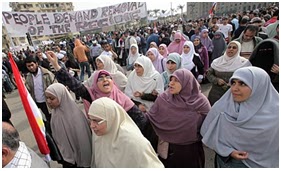
Out of curiosity, yesterday I searched online for the word “streets” in Google’s news search engine. I was surprised that most of the first few pages were dominated by some sort of protest taking place, from the riots in England to protests in Chile and Syria. But I suppose it makes sense. Streets, it seems, have always been the place to stage protests. It’s the one public space that is nearly impossible to control, and you’re guaranteed that you will be seen. It’s important that streets remain open for protests as protests are vital to a healthy democracy. Yes, there will be some that are inevitably senseless and violent like those in England right now, but others will be powerful, decisive moments in a country’s history, such as the Egyptian uprising this past spring. Streets are not only for transportation: they are a country’s meeting place, an arena for the people’s voice to be heard.
The question, of course, is whether or not there is a point at which protests should be restricted or abolished altogether. Should a permit be required, which might prevent all but largest protests from taking place? Are there opinions that one should not be allowed to promote in public? These are broader free speech questions that must always be questioned in a democracy. The street can be an outlet for such a debate, a potent place for all peoples to exercise their right to free speech.
A crowd gathering in London, before clashing with the police. Courtesy of www.dailymail.co.uk

Protesters in Tahrir Square during the Egyptian uprising in 2011. Courtesy of www.guardian.co.uk

Wednesday, August 10, 2011

Bird's Eye View Critique: Houston's Stormwater Sewer System

by Marley Bice, MCRP '12

I've written about combined sewer systems in America's older cities but what about newer cities that were built around separate sewer systems? Are they any better? I've chosen to look at Houston, Texas. Houston was a historic city that experienced significant growth in the 20th century and is now the fourth largest city in the United States. Houston's severe flooding problem is not a huge suprise:

(1) the city is built on a flood plain
(2) the city's landscpae is overwhelmingly short grasses in compact soils
(3) the city chose to increase impervious surfaces and focus on conveyand as stormwater management techniques

I'm not saying I have a solution (or that green stormwater infrastrucutre would solve all of Houston's drainage and flooding problems - undoubtedly not) or that I would have made better decisions myself given knowledge at the time these systems were considered. I'm just saying... take a look at these images from Bing Maps and tell me what you would recommend.

When formulating your recommendations, there are many constraints to consider:

(1) Houston needs to preserve the neighborhoods that have developed around these bayous, so some sort of controlled water's edge needs to be maintained
(2) Consider improving aesthetics and safety around the bayous
(3) Consider how to capture and treat more of the runoff before it reaches the bayous


My major questions: Why was it necessary to purposefully make your catch basin entirely impervious? Why was it necessary to drain that forested area? Why was it necessary to funnel that natural stream into the cement bayou?